Jan 14, 2011

Going Solar for Homes - 2

Back after all the christmas holidaying and the move to a make shift apartment!!
We are building a new home again!!! This is the 3rd and I think we'll be in this one for the long haul. Hopefully the building bug wont bite us again and our grand children will be born here...:). Most of our freinds are not buying this though :).
The inspiration came from "Genine" and her architect husband, fueled with the desire to have a thoroughly green home for ourselves too. Some pictures of our earlier 2 homes below.




Some costings below if you are going solar in India: *Do note the costing could vary slightly depending on the vendor.

There are basically 2 options to choose from when going solar in your home:

1. Partly using solar to power a few commonly used lights and fans. Basically a 1KW system. This sytem would cost you about 2.25 lakh rupees but with a government subsidy of 30%, works out to about 1.5 lakhs.

2. Going solar for the full house. Your borewell motor could also run on this, depending on factors such as light/fan usage and borewell depth. With a little judicious use, the fridge could also be running on solar here. After the 30% rebate the 4.5 lakh costing works out to 3.2 lakhs. However do note that when running the motor, all the other electrical outlets to be plugged "off" or else the system could get overloaded. The best way would be to work out the watt usage and decide on how much is pushed onto the solar system.

Over and above this, the government also offers a soft loan at 5% interest. There usually is a 10 yr warranty on the panels, a 3 yr warranty on the battery and a 1 yr warranty on the overall system.

The battery operates at 90% efficiency and switches to the city grid once drained to below 40%.

An additional advantage is that the home owner can do away with another 50,000 Rs which is the cost of a 2KW UPS backup system as the solar batteries act like a backup UPS and always maintain a minimum 40% backup.

Will go on to some basic design guidelines to be kept in mind when including the solar infrastructure in homes in the next post.

Meanwhile for those of us who are enterprising and love DIY projects, here's an interesting DIY article on installing Solar, which is dank cheaper and possible for almost everyone as the components are ordered from eBay.

Dec 13, 2010

Going Solar for homes -1

One of the weekend getaway projects I have been working on is nearly over and was feeling rather happy with some of the green principles we were able to bring in. My clients were also sensitive and passionate about "living green", so much so that the workers were asked to striclty keep all plastics in a seperate pile without littering the open virgin land during the construction phase.

The country burnt bricks were from nearby villages and hardwood for the doors/windows were from bilwaram trees grown locally and apparently easily replenishable. Most rooms are spanned by large deep porches and almost every space has plenty of natural light and ventilation.(Plans below)

The views from all the windows are fabulous with green hills in the horizon. Of course I would have loved to have full length wall to wall glass openings to capture all that beauty. But my client knew better of their budgetary and practical limitations and so sigh! we had to settle with half length windows. The floors are wrapped in lovely terracotta tiles again brought in from nearby villages.

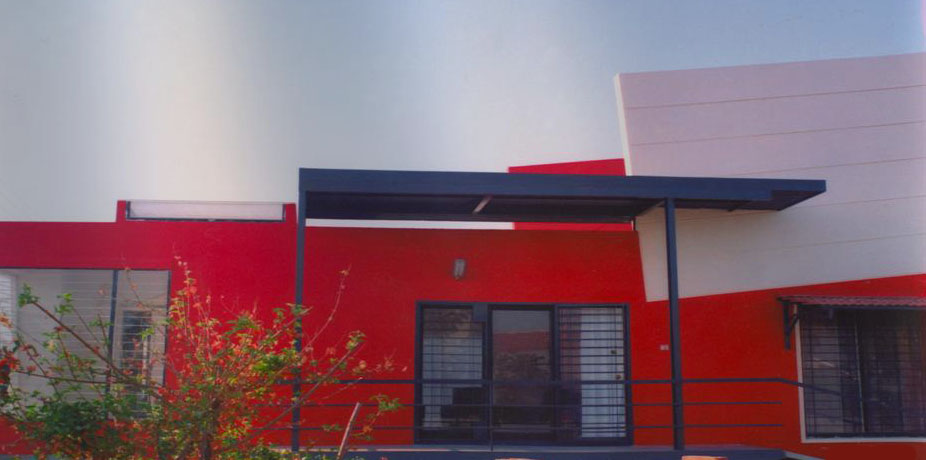
What takes the cake in this home is the solar powered borewell motor. (Image below) A few of the lights and fans are also solar powered. Now about the economies and facts on fitting solar panels in Indian homes, wait for my next post....ta daaaa.

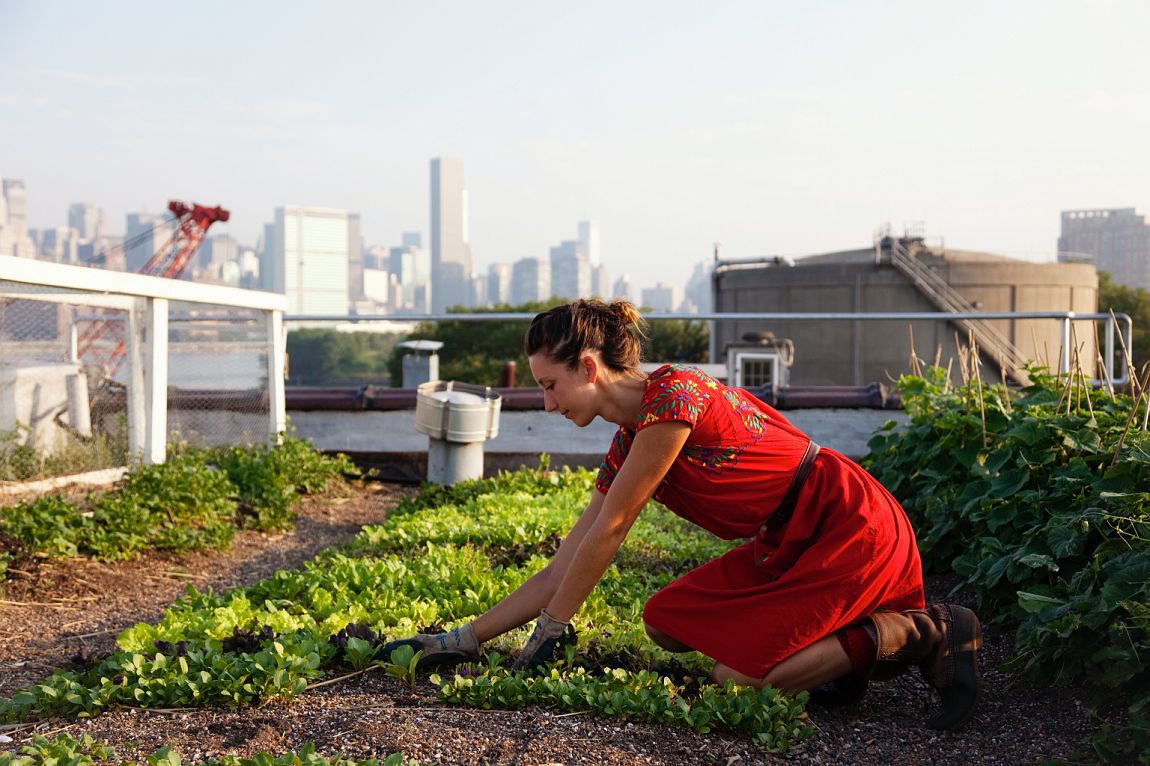
Sustainable living with Urban Roof top Farms

I know, I know I skipped 2 fridays yet again without a blog post. Still struggling to keep my commitment with at least the "once a week blog posting". Somehow, work and everything else that needs an instant response gets in the way and I am avalanched and the promised blog posting disappears into the chaos.

Some times I wonder if we urban dwellers are just "driven" creatures with unreasonable urges to prove ourselves not just in our careers but in almost everything else burning ourselves out. That's why I'm so inspired by Annie of 'theselby'. She seems to have brought in the languidity of country side living into her urban home and at the same time excercising sensitivity to her nieghbourhood stressed out storm water system. That's truly living "Green".

Some images below from "The Selby". Doesnt it seem like the possibilities for us urban dwellers across the globe are endless as a roof top any where in the world has the same physical make up except for climatical variations!!!! I mean, one can't any more make excuses for not having enough open land or good soil conditions, etc etc. Everyone has a roof and all these obstacles can be overcome with green roofs. Even multi aparment dwellers have huge roofs and strong associations. With some inspiration and commitment it would be possible to transform these roofs into urban farms as a community.


Nov 19, 2010

Sustainable living is uber fun

The last couple of weeks has found me lost and dreamy eyed in the crafty world of upcycling and recycling home decor and apparel. Traversed through several gifted women's crafty blogs that never seem to run out of fun upcycling and recycling ideas. Realized that the possibilities are endless and have started looking at our old T-Shirts and other apparel with new eyes and plenty of ideas to upcycle into fun hip clothing and accessories.

I know, I know you dear reader are propably wondering what all of this has to do with Sustainable Architecture. Well, as we said and realized in the earlier posts that a lifestyle also counts, felt that it would be a great idea to bring in a lil peek into the impact these amazing ladies are making with their lovely ideas. Some of my favs. are listed at the end of this blog post.


Apparel and accessories is one major area where most of us succumb to the never ending gratification of laying hands on more and more either because we are easily and quickly bored with our current clothes or because fashion trends change fast and most of us are drawn towards the "newer" and the "trendier". Well, what if you could take a second look at something from your wardrobe that you'd like to throw away to be able to refashion into something else new and trendy.

Yes, yes that's possible. Thats exactly what these lovely ladies share so freely in their crafty blogs. There are tons and tons of recycling, upcycling tutorials out there for the uninitiated. Well, I dived in for the first time and transformed my 2 yr old almost trashed construction site wedges into a funkier version. The soles were intact and only the top cover was frayed and peeling.


Well, voila with some inspiration from this crafty lady and some paint I converted 'em wedges into this. Ps. the straps are cut from an old T'shirt.


Hope you are as inspired as I am to take a second look at those old clothes and accessories with a pledge to apply sustainability.

Great ideas available here:

Ruffles & Stuff

Made By Lex


Oct 29, 2010

Sustainable Living and Design for existing structures-3

Since, I've been rambling on and on about green roofs, thought I'd get into action and wrtite in some detail on how a green roof for a regular home dweller could become a reality. Is it really possible for us or are green roofs only for larger or expensive building projects. Even more so to those of us in Bangalore and most of India, where professional green roof services are still not common. Seems kind of visionary but it really isnt with some understanding and investment in time and money.

In most climes, a properly designed 3-inch deep vegetated roof cover will provide a durable, low maintenance system that can realize the many benefits that green roofs have to offer.

Photo from OurSquareFootGarden

There are 2 types of green roofs by standard methodology:

-Intensive green roofs have deep soil and can support trees and larger plants. Which is a definite no-no for us regular home dwellers as it requires a complex laying system and is high on maintenance. These are good for commercial, largescale residential buildings that have access to sophisticated green roof services and a maintenance team onboard.

-Extensive green roofs are more self-sustaining than intensive roofs, and require minimal maintenance. Characterized by shallow soil (~6 inches). For us home dwellers, extensive roofs are the most practical. This type can support whole patches of sedum, grasses, herbs with interweaving gravel, slate pathways for people movement. Those willing to spend more time and money could go in for turf over larger areas, but requires ongoing regular maintenance of mowing, weeding, fertilizing, and irrigating, just like any high-use area on grade.

Photo from OurSquareFootGarden

Going forward where ever "Green roofs" are mentioned in this post, I would be refering to the extensive type.

So what are the components of a green roof. Very simply put, our regular existing roof with an additional overlay of a waterproofing membrane and then a layer of soil and plants. They may also incorporate other landscape features such as walkways, patios, arbors, and other such structures. While a great many green roofs are flat or nearly flat, there are also growing numbers of sloped (some quite steeply) green roofs, as well as vertical or near-vertical green walls.

STEP 1: Start with a waterproof membrane such as asphalt or the more commonly used waterproofing liquids in Indian homes . This step is essential. Most roofs fail because of water damage.

STEP 2: Add a root barrier. Mixing the waterproof liquid with cement and plastering the roof should do·

STEP 3: Put in a drainage layer. A drainage layer is essential to carry away excess water to gutters so that it can be carried away from the roof. Typical drainage layers are made of granular materials such as gravel & fines, lava & pumice, expanded clay & slate, and different recycled materials such as crushed roofing tiles or brick. The drainage capacity has to increase closer to the gutters and roof drains.

STEP 4: Add a filter fabric The fabric has to be porous enough to allow water to flow down into the drainage area while holding the soil or growing medium in place. Sheets from polyester or polypropylene can be used. (These sheets are available on J.C road for the Bangalore folks)

STEP 5: Put in the soil. to a minimum depth of 3 inches would be best to use a mix of lightweight perlite, cocopeat and organic manure. Local soil would also be okay but could have weeds and would be heavy and not porous enough.

Photo from GreenRoofsWordpress.com

STEP 6: Building a water supply sytem. Drip irrigation would be best as will apply water directly to the roots of the plants. It's more efficient than taking a hose to your roof, using less water, which also means less weight on your roof. Drip irrigation is an easy way to supply fertilizer to your plants to get them started. Ultimately if you've chosen the appropriate plants for your climate, you'll be able to turn off the irrigation system.

STEP 7: Plant your succulents, sedum, portullacca, wild native grasses, Gazanias basically low height, shallow root drought tolerant plants· For your shrub like veggies, container planting would be the solution. If your roof is pitched, you would require a wind barrier to keep the soil and plants intact during the growing period. In a years time approximately, the root system would keep it together. Could be a net like sheet that breathes well staked on top of the roof bed.

Oct 22, 2010

Sustainable Living and Design for existing structures-2

Since I realized that sustainable living is more powerful when its a lifestyle, I did something last week that would make the green community proud. My 10yr old food processor had burnt, and so went to the store to get another one. The new model came with a ton accessories, that would just gather dust on the shelves as we knew from experience that we would never use them. And so I told the store guys to keep all those accessories with them for free and supply it to any one else who may need it. Small measures, Big impact with a clutter free life and less pressure on having to increase storage space!!! The previous post got me seriously thinking about the huge potential of greening my existing home's terraces with home grown produce as I dont really have much ground area available for a substantial produce unless I uprooted the ornamentals, which would be sheer wastage and a shame. Was extremely inspired by the team behind Brooklyn Grange that have used their green roofs to generate and supply large volumes of organic produce to stores and restraunts in their part of town, creating a sustainable community by going local. Loved this residential green roof in Norway. Photo credit Nick Enge on Lotus Live

Green Roofs if installed well without compromising the roof structure, has several benefits, some of them listed below:
-Insulating the interiors from extreme cold or heat. Green roofs can help reduce the "heat island effect"

-Precious extra garden space for city homes and apartments

-Possiblity of eating home grown organic fresh produce even in high density cities

-Green and fresh air community spaces for multihousing units that dont have the luxury of a park on the ground.

-Become habitats for birds and insects. -Reduce storm water volumes on stressed corporation drains. -If done well on a sloping roof or on vertical walls, could make a home look nicer. -Green roofs can reduce the surface temperature of a roofing membrane significantly — by up to 40 degrees Fahrenheit (22 degrees Centigrade) on hot sunny days. This buffering can double the life expectancy of the membrane

-Green roofs can provide substantial noise insulation below

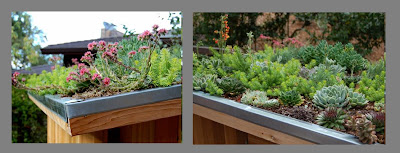
-Green roofs cool the surrounding air significantly by respirating the retained water. They can absorb airborne toxins and return oxygen to the air. Some pictures below of lovely succulents that are low maintenance for your green roof. Courtesy Design Sponge. Am sure potullaccas would work wonderfully well on roofs in Bangalore. Am gonna give it a try with the next Green home.

Lovely gallery of some cool green roofs round the world. The Geek Gardener is a great resource for those of you keen on starting a vegetable garden in containers on your roof without having to install waterproofing . The geek gardener lives in Bangalore, India and has loads of info to get you successfully started.

The economics of green roofs continue to shift toward ever more positive long-term financial and resource benefits as airconditioning/heating energy bills are drastically lowered and has been proven that the service life of roof waterproofing layers are substantially extended as the layer is now not directly exposed the ravages of nature. Green roofs have thus become a growing and vital component of our world's striving for sustainability.

Oct 14, 2010

Sustainable Living and Design for existing structures-1

So you built your dream home in the past and now with all the “green” awareness, you realize your house is not sustainable at all and would very much like to do your bit, and are rather stuck. That’s how I felt and especially more, mine being an architect’s residence. Whilst I couldn’t break and reconstruct the structure costing even more wastage, the one area amends could be made and the most powerful I realized was in Energy and Water management like this barn makeover in Netherlands featured in Apartment Theraphy. Photo Credit - Apartment Theraphy. Greening the roof and restructuring the landscape in the garden were other ideas that popped into my mind. Still not satisfied began to realize that really to be honestly “green” also meant living “green”. This got me thinking every time I shopped and received stuff in well packages boxes and plastic covers with lovely tags and began to realize thanks to crafty blogs that the potential was huge. So instead of just blindly trashing empty boxes and packets, starting stacking them in my basement and trying to find ways to reuse, embellish and use them as much as possible to meet our never ending needs instead of taking off to the nearest supermarket almost immediately we realize we needed something.

Oct 7, 2010

Sustainable Landscaping

Landscaping with sustainable techniques is critical to green architecture. It is our gardens and landscapes that hog the largest volumes of potable water.

Design Sensibility - Gardens of the future would also have to be sensible in design. Large expanses of lush lawns can be replaced with strips of lawns interspersed with pebbled areas. Turf that is used for only display could be replaced with xeriscaping with native grasses interspersed with native succulents and wild flowers. These gardens can also be made beautiful by creatively mixing multicolored succulents such as cacti, pebbles, rock and desert grasses.

Control run-off water by redirecting stormwater to landscaping features such as dry ponds, rain gardens, bioswales to hold water.

Build small to lessen impact on the surrounding eco systems and maximize open space.

First, the soil is conditioned to help it retain water, and the soil is also regularly conditioned through the life of the garden to make it more efficient. Plants with similar water needs are grouped together so that they can be watered in bunches, and many shade trees, bowers, and protective walls are installed to reduce the risk of evaporation. Dense ground cover also helps to keep the soil moist. If plants with higher water requirements must be planted, they are typically planted close together and in a well protected area. They may also be situated uphill, so that plants below them can take advantage of their runoff and unused water.

A xeriscaped garden is at once easier and more difficult to maintain than a regular garden. It usually requires less weeding, trimming, and watering, three time consuming tasks associated with gardening. Since xeriscaping is designed to replace lawns, mowing is also not a necessity. However, the garden beds must be regularly cared for to ensure that they are at their most efficient. Thoughtful care must also go into planting in the garden so that it does not start to get weedy or ragged in the drier months of the year.

Smart Irrigation- Shrubbery and tree saplings can be watered effectively with drip irrigation saving a lot of water. Designing a landscape that doesn’t need any water in drought prone areas must be a priority. If every building would harvest its rain-water runoff and grey water for gardens, the total savings would be tremendous.

Use Native and Adaptive Plants - Shrubbery, Tall Grasses local to the region, that can withstand large periods of drought should be used for most part. There is an amazing variety of nice looking shrubbery that is drought tolerant. Some examples below of drought tolerant shrubbery that'll grow in Southern India and any other warm region. Silver Leaf (White Sage/Purple Sage), Bougainvilla, Hibiscus, Casurina, Tall Cacti, Pomegranate, Cypress, Frangipani, Desert Rose, Crepe Myrtle. Some drought tolerant ground covers are Portullacca, succulents such as cacti, native grasses, lilies, wild gazania..

Minimizing Hardscape Areas - Ground areas are hardscaped and softscaped with gradients to harness all water run-off into recharge pits or recycling tanks. Alternately if there are no recharge pits, it would be best to pave the ground with grid pavers, gravel, pebbles, porous pavement reducing the storm water runoff loads on the city's drains and increasing on-site filteration. Also lessens the heat island effect.

Using Reflective Materials for paving such as light colored locally available stone slabs, pea gravel, lighter shade replenishable wood boards would help reduce the heat island effect and enhance illumination levels

Landscaping for Building Sustainability- A powerful and age old technique for insulating buildings from heat & cold especially in situations where there are site constraints, constraints due to adjacent properties, would be to plant generous amounts of trees & shrubbery without compromising on letting in sufficient natural light. The flip side of planting too many trees, tall shrubs near a home is that the room interiors end up being dark which is again not healthy for the inhabitants and would result in switching on lights during the day thus offsetting any energy savings. A careful balance to be maintained by understanding the height, girth that the tree/shrub can grow to. We often plant them as saplings and hence plant them more closely than necessary and before you know it, you have an overcrowded garden which again is a kind of wastage.

Organic Gardening- Another destructive norm followed in today’s landscapes is to drench the gardens with artificial pesticides and fertilizers. This is very harmful to the local eco system and is as important a consideration to sustainable landscapes. There are several, practical natural alternates possible as described here.

Jul 1, 2010

Sustainable Utilities - Energy & Water

Utilities are those essentials that sustain the building users and have the most impact on our environment. This is an area, when designing and planning Green buildings that can either cause tons of wastage and huge costs to the environment such as expensive usage of potable water and energy, waste management. Just by implementing some good old common sense most of the damage and wastage could be minimized. But the sad truth is that due to ignorance most constructions in the past have not at all considered these factors and continue to be a huge liability on the our eco systems. Perhaps that is another topic. Let’s say you already own/use a structure that has not been sensitive at all to the environment. Whilst you can’t break and reconstruct the structure costing even more wastage, the one area amends could be made and the most powerful is in Utility & Maintenance management. Will try and pick this up in a subsequent post. Water Oh, now that we are so acutely aware of how precious potable water is we shudder when we use good drinking water to water our large lawns, flush our toilets, wash down our huge glass facades, etc etc……. the list is endless. All of these could have been easily accomplished with water harvested from the rains, recycled from our baths & washing machines, most which right now uselessly flood our city’s storm drains sometimes causing damage. Our towns and cities due to hardscaped roads and landscapes flood storm drains with huge amounts of rain water. Water from rains can be harvested and funneled into a reservoir, from where it is diverted to bathroom flush tanks, garden hoses. This reservoir could be a simple rubberized/sintex tank, concrete tank with a storage capacity of 11,350 liter (3,000-gallon) and a 200-gallon cistern… at garden level or below ground level. This reservoir can be capitalized on in high summers to flush the toilets and water the gardens. Alternately, in extreme heat conditions, this reservoir can be designed to form an indigenous part of the house thus cooling the adjacent rooms also naturally. Alternately the rainwater runoff from the roofs and site could be channeled to pits clad loosely with gravel in close proximity to bore wells thus recharging bore wells with the run-off from the site. There are rainwater harvesting experts in Bangalore who actually channel the run-off through the storm drains into bore well recharge pits. Not only is he increasing his reusable water capacity, he also is easing the pressure off the city storm drains that usually get flooded during rains. The gains would be huge if many urban dwellers would give this a try. Energy Buildings can now be totally off the grid in India as there are solar powered solutions, where the entire building’s electrical needs including pumps, fridges are solar powered. Of course the initial costs are prohibitive and probably those who don’t have the necessary capital could go for a partial solar solution which would also have huge impact and savings. There would be substantial savings to the user also in the form of cheaper energy bills. There are solar panels also for hot water, which is quite popular and which qualifies the buildings occupants for substantial subsidies in energy bills in India from the government. Never cease to be appalled when I see folks still going for high energy consuming geysers in spite of such measurable short term gains. Another way to reduce energy losses and maximize savings is to use energy efficient appliances. Almost most household appliances are available now in energy star formats. In urban dwellings the biggest energy culprits are lights, fans and air conditioning. In a city like Bangalore despite increasing temperatures as compared to the past, air conditioners can comfortably be done away simply by designing the buildings smartly so as to reduce heat buildup. Higher ceilings, cross ventilation, deep shades/patios on the south, west, east (in hot places like Chennai), exhaust fans in the ceilings funneling out the hot air that rises up in the room with lower inlets for cool air, smart room orientations are effective enough to control the interior heat to a comfortable temperature without having to use air conditioners. Huge areas of glass and concrete brick walls bring in a lot of heat and must be in deep recesses or screened with trees & shrubbery. Passive lighting using translucent glass such as glass bricks, Acrylic glass are used to minimize heat gain without compromising on natural light. White colored roofs being extremely reflective reduce the heat island effect drastically. Interiors must be well lit so as to avoid switching on electric lights during the day. Skylights can be used effectively to tackle situations where walls cannot be opened to make way for windows. In the night landscapes can be effectively and cost effectively be lit with solar lamps. Not only are the lamps cheap, money is saved on wiring & Conduiting also. They are available everywhere now and suits the purpose well. It’s an absolute waste to use clean energy, when there is an alternate so easily available. However for more aesthetic options, solar lamps can be supplemented with LED lights. Interior lighting can be low energy consuming CFLs and LEDs. Waste Management Waste management would probably the most challenging feature to enforce as it involves cultivating an ongoing discipline and sensitivity transforming into a green lifestyle. If diligently practiced the rewards for the community are huge as otherwise harmful landfills are reduced and instead useful products are made such as plastics recycled to form a myriad of products, paper recycled again to form other useful products, garden organic manure made from kitchen waste f. In fact most families could start a composting pit of their own in the corner of the garden thus generating the manure for their garden at site without wastage of fuel for transporting the kitchen waste to a composting site and back again as organic manure.

Jun 15, 2010

Sustainable Materials

When designing “Green Buildings” materials are key. The principle is to choose materials that are available locally, that are easily replenished and finished without much processing. For those passionate about going “Green” there are several sources to obtain reclaimed or easily replenishable construction materials. Some suggestions below: Walls: -Locally made country burnt bricks. -Fly ash bricks are another option as it is sourced from recycled industrial waste and available in Bangalore and other parts of India. Fly ash bricks are also stronger and come in many colors. Doors/Windows:

In terms of the environmental impact of material sourcing for construction materials, the use of timber rather than uPVC or aluminium frames has so far provided the largest environmental saving.

This fact has been independently assessed by BRE (Buildings Research Establishment).

-Locally sourced timber that replenishes easily like Bilwaram, Neem, Eucalyptus, Silver Oak, Bamboo, Strengthened Rubberwood. -Reclaimed wood frames from old, demolished buildings is another option. (*Available in Bamboo bazaar near Russell market in Bangalore.) Foundations: -Existing rocks used as footing anchors, rather than blasting the rock off the site destroying the natural geological structure of the surrounding terrain. -Excavated soil thrown back in & rammed to strengthen foundation earth. -Stone available locally for the foundation beds. Flooring: -Bamboo flooring is a great green option as bamboo trees are easily replenished and it is locally available. -Locally made Terracotta tiles painted (for more color options) and polished with lead free products is yet another option. -Terrazo tiles made from broken ceramic tiles, Tile factory wastage. -Rubber wood flooring is another great option as rubberwood trees are also easily replenishable. -Easily replenishable woods such as silver wood used for outdoor deck flooring. Left untreated weathers to a lovely grayish antique texture Wall Finishes: -Lead Free paints. -Discarded, reclaimed wood pieces refurbished for wall paneling and trimmings and ledges. -Naturally, locally available stone used for cladding designs. -Softwoods such as pine wood reclaimed from cargo crates for outdoor furniture, indoor/outdoor cladding. -Easily replenishable woods such as Silver Oak and Red Cedar used for external wall cladding. -Water based textures applied on external walls cause the walls to breathe easy as plastering/priming/painting can be avoided.